
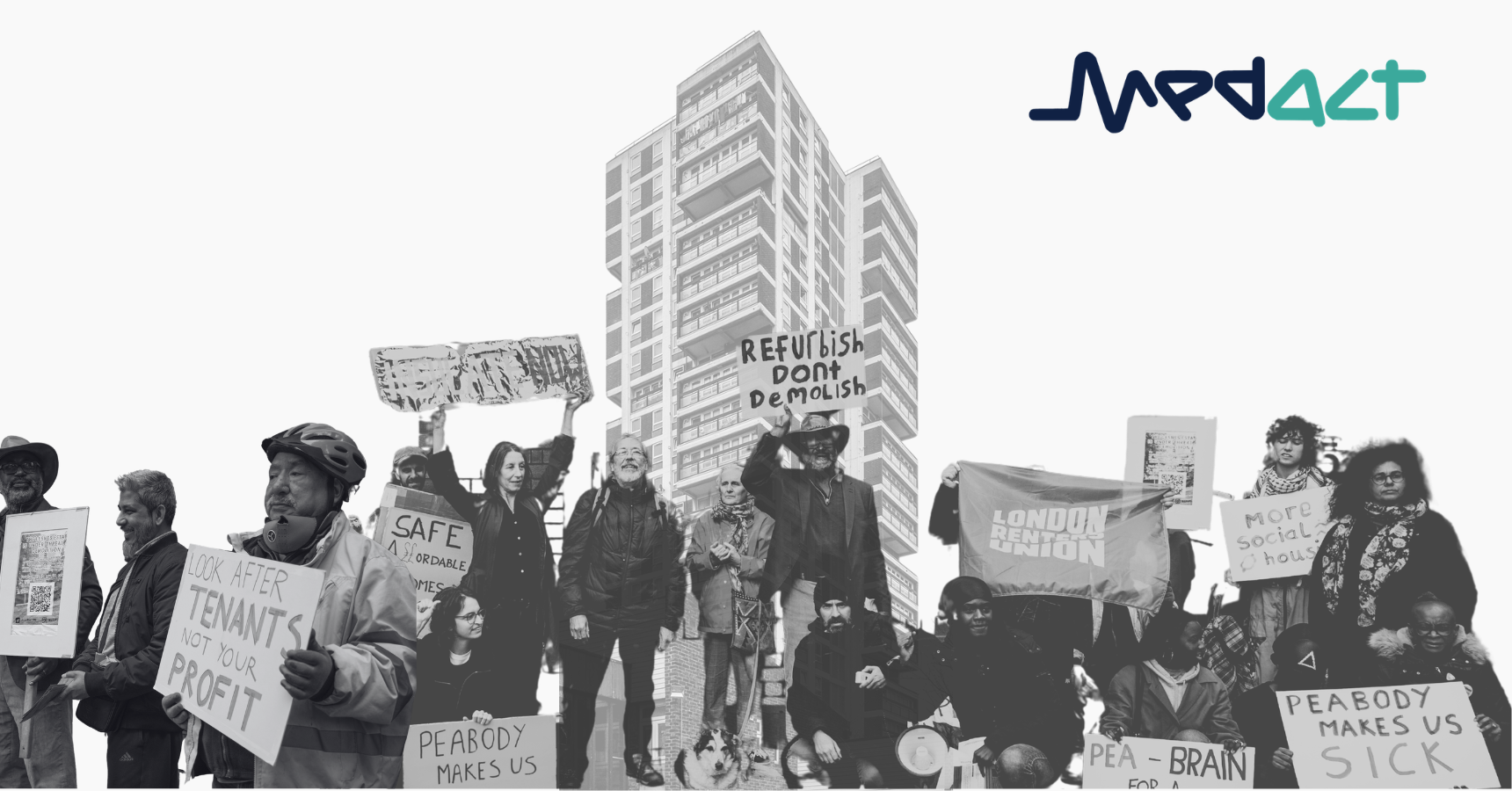
The story of our health and wellbeing is shaped by the political conditions we are born into, and those in which we grow, live, work and age. Our lives unfold within these environments much like plants growing in a particular soil: the quality of the soil, sunlight, and water determines how well they will flourish. In the same way, places where we spend most of our days – usually our homes and work – influence our exposure to health risks, and result in widespread health inequities.
Housing is one of the clearest examples of how political conditions shape health. A home is far more than a roof overhead; it is the ground on which people build their daily lives. However, unaffordable, insecure, and unsafe homes are making us sick.
Across the UK, millions of households now rent privately, and many now spend far more than 30% of their income on rent – the level widely considered to be affordable. In London, this proportion often exceeds 40%. For many families, rent payments are like a heavy anchor in their finances, pulling them closer to poverty each month.
Overcrowding illustrates another dimension of the problem. In 2024–25, around 651,000 households in the rented sector – across both social and private housing – were living in overcrowded conditions. Overcrowding is most prevalent in social housing, where up to 9% of households are affected. This is largely because tenants often have little or no choice over the size or type of home they are allocated, combined with an ongoing shortage of suitable accommodation. In the private rented sector, many families are forced into smaller properties simply because adequately sized homes are financially out of reach.
The growing shortage of affordable housing has also led to rising housing insecurity – the need to move frequently and/or constant worry about eviction – and homelessness. By mid-2025, over 132,000 households in England were living in temporary housing, including more than 172,000 children. Behind these numbers lies a public health crisis.
Renting, particularly when housing is unaffordable or insecure, is linked to higher levels of stress and inflammation in the body. Financial pressure from high rents increases the risk of anxiety, depression, and sleep problems. Some research suggests that the chronic stress of insecure rented housing can speed up biological ageing. Housing insecurity also disrupts work, education, healthcare access, and social support networks.
When housing is unaffordable, we are often forced to accept poor-quality conditions. Overcrowded homes increase the spread of infectious diseases and reduce privacy and safety. Damp, mould, cold, and pest infestations contribute to respiratory illnesses, allergies, and poor mental health. Affordable housing should not mean unsafe housing, yet rising rents often leave us with no alternative.
For children, the effects of unstable housing can last a lifetime. Childhood is a crucial stage for growth and development, and stable housing acts like a foundation stone during this period. Through overcrowding, repeated moves, or temporary accommodation children will feel the impact in their physical and mental health and worse educational outcomes.
At its most extreme, unaffordable housing leads to homelessness. Homelessness is consistently linked to dramatically poorer health and shorter life expectancy. Without a stable place to sleep, cook, store belongings, or simply receive mail, accessing healthcare and managing chronic illness becomes extraordinarily difficult.
Importantly, the burden of unaffordable housing is not shared equally. Structural inequities mean that racial and ethnic minority communities are disproportionately affected. Disabled people often face lower incomes, higher living costs, and a severe shortage of accessible homes, compounding both financial hardship and health risks. In this way, the housing crisis acts like a magnifying glass, intensifying inequities that already exist and reinforcing cycles of poverty.
For these reasons, affordable, secure, and good-quality housing is not just an economic issue – it is a public health necessity. Therefore, health workers have a responsibility not only to treat the illness in the body but also to challenge the political conditions causing the illness in the first place. Affordable housing improves both physical and mental health, reduces inequities, and strengthens communities. A secure home provides something essential for wellbeing: a stable ground from which people can rest and thrive.
Recognising this, housing campaign groups such as Homes for All, London Renters Union, Homes for Us Alliance, and Greater Manchester Tenants Union, along with Medact, are coming together and mobilising for change. We are calling for the government to adopt measures including rent controls – supported by 71% of the public – and demanding major investment in social housing to address the roots of the crisis. A National Housing Demonstration has been organised for the 18th April at 1pm in Central London, bringing people together to demand homes that are safe, secure, and truly affordable.
